

When we think of jellyfish, we usually picture the ocean and the beach. However, a few species live in freshwater. One of this is Craspedacusta sowerbii, a small medusa measuring about two centimeters in diameter. It is native to Asia and has caused problems in Brazilian rivers and lakes since its introduction. Scientists from the Biota/FAPESP Program conducted morphological and molecular analyses of the species, identifying that it was introduced to Brazil at least twice through two distinct pathways. They also emphasized the necessity of continued monitoring to comprehend the ecological consequences of this invasion.
“The most widely accepted theory is that this species spread around the world via aquatic plants, such as water hyacinth, and established itself globally, including in Brazil,” says Sérgio Stampar (UNESP Bauru), the study’s coordinator. The study, published in the Austral Ecology journal in February of this year, analyzed historical records of the species’ presence in South America, as well as specimens collected from a lake in Paraná State, following a tilapia mass mortality event.
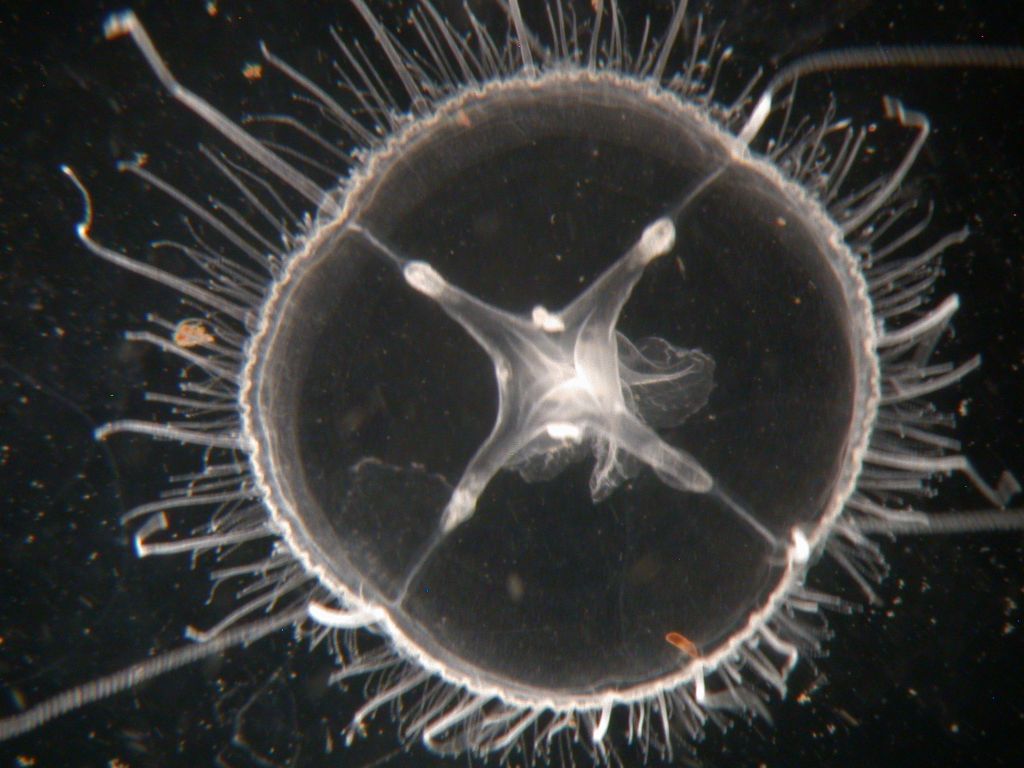
Craspedacusta sowerbii, like most other cnidarians in the class Hydrozoa, has a life cycle that alternates between a sessile polyp stage, during which it is attached to a substrate, and a medusa stage, during which it swims freely in the water. “This species has an explosive reproductive mode. During the medusa stage, it occurs in large numbers for only three or four days. This can cause problems for humans and fish, as was observed at the site of our study,” the researcher explains.
Another curious characteristic is that only females were found in the studied lake in Paraná. “Here in Brazil, this species is outside its natural habitat, so its life cycles can differ greatly. There may be something in the environment causing only females to develop. That is something we still need to investigate. In the case of the population we studied, we believe that only a single polyp arrived in the region, which reinforces the conclusion that this is an invasive group”.
A molecular analysis of two distinct populations, one from Paraná and one from Santa Catarina, showed that they do not share the same origin. “We found that the Paraná population shows molecular proximity to those found in Chile. In contrast, the Santa Catarina population is strongly linked to jellyfish from southern Asia, particularly Singapore and China,” Stampar explains, “this strongly suggests that these populations were introduced separately.”
The research continues. The team is now mapping the presence of these jellyfish in freshwater environments, particularly in Central-West and Northern Brazil and in caves, using environmental DNA techniques. The goal is to identify ancestral lineages of these organisms in Brazil. “Identification by observation, especially in the polyp stage, is virtually impossible. So, we are using this technique to determine where these animals have spread and, if present, which lineage they belong to. These data can help us measure the extent to which the species has dispersed in the country. They will also serve as a basis for understanding the distribution and population dynamics of freshwater jellyfish, as well as the possibilities for managing exotic populations with invasive potential”, the researcher concludes.
Access the full article at:
daSilva, L. M. D., M. I. Deserti, M. N. Pereira, et al. 2026. “Brazil’s invisible invaders: Are Craspedacusta jellyfish a ticking ecological bomb?” Austral Ecology 51, no. 3: e70201. https://doi.org/10.1111/aec.70201.